
The CHEP Environmental Epidemiology team
We investigate how bushfire smoke, air pollution and climate change can impact short and long-term health outcomes of children.
 Today, the largest cause of disease and premature deaths in the world is caused by pollution (The Lancet Commission on Pollution and health). In Australia there is an increasing trend of non-transmissable diseases including obesity, type 2 diabetes, caridovascular disease (CVD), asthma, chronic obstructive pulmonary disease and neurobehavioural problems.
As these non-transmissable diseases become more prevalent, the future costs of diagnosis and treatment are likely to increase dramatically, highlighting the imperativeness to intervene in early life, optimise nutrition, and prevent and reduce exposures to hazardous chemicals/toxicants.
Our research investigates the rise of diseases and neurobehavioural problems in children, and the link to increasing exposures to environmental pollutants, including:
- Ecological exposures, including contamination of air, water, soil, and the food chain by environmental toxicants from large scale industries, such as extractive industries, flame retardants and per- and poly-fluoroalkyl substances (PFAS) from fire-fighting foam, and agricultural pesticides, potentially affecting populations living in the vicinity of these activities.
- Modern household exposures, including plastics and plasticisers, flame retardants, pesticides, cleaning products, and personal care products – all of which can have adverse health effects.
- Ambient air exposures, including combustion-related products from traffic, wood smoke, bushfires, coal-fired power generation, and industrial emissions.
Through this research, we aim to understand how exposures to environmental pollutants increase the risk of diseases in children and discover how to protect children from environmental exposures, so they can live safer, healthier lives.
 Impact of air pollution and antioxident-rich diets on child health
This project investigates the impact of early-life exposure to air pollution on childhood health, focusing on respiratory function, the gut microbiome, lipid metabolism, inflammation, and oxidative stress in children up to 10 years of age. It also explores the potential protective role of diets rich in antioxidants and anti-inflammatory nutrients. By examining how these dietary factors may mitigate the adverse effects of air pollution, the study aims to uncover underlying biological pathways and inform targeted interventions.
EMBER: Environmental Measures of Bushfire smoke Exposure and Respiratory health
Bushfires and their health impacts are a national concern. The EMBER Study is a holistic assessment of bushfire smoke exposure in homes and the relationship with health outcomes for parents and children. EMBER combines environmental assessment, exposure assessment and health assessment, with the aim of protecting the health of communities during bushfire smoke events.
 Green space and children's health
Children are uniquely vulnerable to harmful environments, due to their physiology, developmental windows of susceptibility and age-related behaviours. The urban environment is undergoing rapid transformation, as populations grow, children spend more time indoors, and the effects of climate change are starting to be experienced worldwide. Urban green space, the area of an urban area occupied with photosynthetic vegetation such as grass, shrubs and trees, is perhaps the best example of an environmental factor that may act as a public health good. Research has identified health benefits associated with green space, such as improvement in mental wellbeing, reduction in cortisol, an increase in physical activity, improved neighbourhood cohesion, and exposure to beneficial microbiota. Green space may play a role in ameliorating hazardous environmental exposures, such as air pollution and temperature extremes.
The aim of this study is match environmental data to a cohort of Australian children and examine the association between maternal and child exposure to environmental factors with the health of the child. Birth outcomes, lung health and neurodevelopmental outcomes will be explored.
 Queensland Bushfire Research Network (QBuRN)
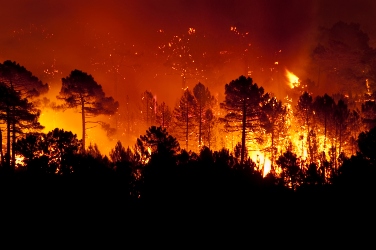
QBuRN (Queensland Bushfire Research Network) is a collaborative research network focused on understanding how bushfire smoke affects people’s health, and how communities can be better protected as fires become more frequent and severe.
Bushfire smoke affects millions of Australians each year, especially children, older adults, firefighters, and those living near bushland. QBuRN brings together researchers from across Queensland with expertise in health, environment, and community-based research to better understand these impacts and reduce harm.
 Team leader: Dr Dwan Vilcins
The Environmental Epidemiology team is led by Dr Dwan Vilcins. Dr Vilcins is a dedicated post doctoral researcher, with a particular interest in children's environmental health. Dr Vilcins is also the Director of th World Health Organisation's (WHO) Collaborating Centre for Children's Health and Environment.
The Environmental Epidimiology team is a team of dedicated and enthusiastic researchers, including:
- Dr Seon Park, Post-Doctoral Researcher,
- Miss Sophie Iles, Senior Research Assistant,
- Mrs Hasna Hena Sara, Higher Degree by Research Scholar,
- Mr Thomas Boissiere-O'Neill, Higher Degree by Research Scholar,
- Miss Emily Vivian, Higher Degree by Research Scholar,
- Dr Sarker Masud Parvez, Casual Principal Researcher.
The Environmental Epidemiology team collaborates with leading industry partners allowing our research to have a broad and deep impact in our community and accross the world, including:
- The World Health Organisation
- The University of Queensland's Queensland Alliance for Environmental Health Sciences (QAEHS)
- The University of Queensland's Australian Infectious Diseases Research Centre (AID)
- CSIR Water Research Institute
- The National Health and Medical Research Council
- Queensland Bushfire Research Network
- The Pacific Basin Consortium (PBC) for the Environment & Health
- Basel Convention
- Solving the E-Waste Initiative (StEP)
- Children's Environmental Health Centre, Mount Sinai Hospital
- United Nations Industrial Development Organisation (UNIDO)
- United Nations Environment Programme (UNEP)
- United Nations University (UNU)
- Centre for Safe Air
- Global Alliance on Health and Pollution (GAHP)
- International Environmental Technology Centre (IETC)
- The National Institute for Environment Health Sciences Superfund Basic Research Program
- National Institute of Environmental Health Sciences (Durham, North Carolina, USA)
- Louisiana State University
- Gwangju Institute for Science and Techology (Gwangju, South Korea)
- Victorian Environment Projection Authority
- A SHARED Future
- Indigenous Environmental Health Risk Assessment Team - Developing an Indigenous Value-Based Approach to Environmental Health Risk Assessment
We are a trusted research partner with the following government and industry associations and organisations:
- National Institutes of Health, USA
- National Health and Medical Research Council
- Australian Research Council
- Children’s Hospital Foundation
- Child Health Foundation
- The University of Queensland
- Centre for Safe Air
If you are looking to work with a trusted research partner in environmental epidemiology please contact Dr Dwan Vilcins